

Blog
Fourteen Thousand Students and a Classroom Model Built on Trust
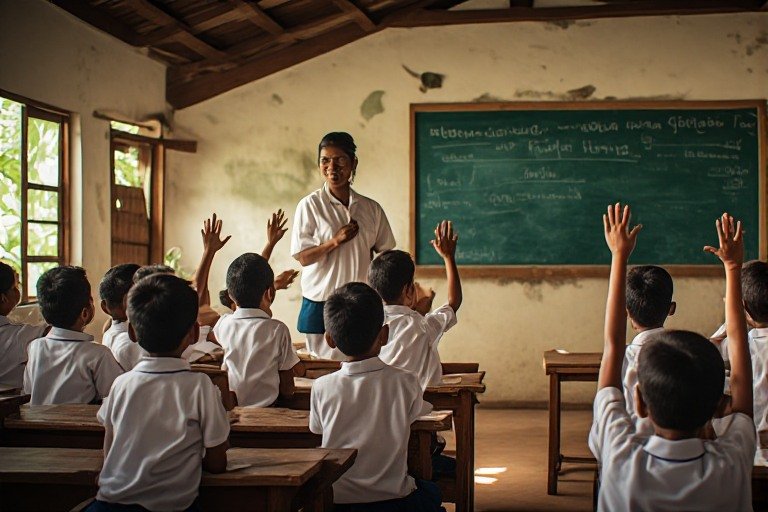
Fourteen thousand is a big number, so let us start with one small room. Grade four, a school forty minutes from Batticaloa town, thirty one children, one teacher named Mrs. Thangamalar who has taught there for seventeen years. Walk into her classroom today and the first thing you notice is the quiet. Not silence. Quiet. The sound of children who feel safe enough to think aloud.
What trauma informed means in practice
The phrase sounds academic, so here is the plain version. Many children in the Eastern Province have grown up around disruption, displacement and loss. A classroom that ignores that history gets restless children and calls it bad behaviour. A classroom that understands it gets something very different.
Our model trains teachers in a handful of concrete practices. Greet every child by name at the door. Start the day with two minutes of breathing or a song, never a surprise test. Give warnings before transitions. Praise effort out loud and correct errors privately. Keep a calm corner with books and cushions where an overwhelmed child can sit without punishment and rejoin when ready. None of this requires new buildings or imported experts. It requires training, practice and a principal who backs the teachers trying it.
Mrs. Thangamalar was sceptical at first and says so freely. She had controlled classes the traditional way for a decade and saw no reason to change. Three months after training, her referral slips for misbehaviour had fallen from eleven a month to one. She now trains other teachers in her zone, and introduces herself at workshops as a former sceptic, which makes her the most persuasive speaker we have.
How fourteen thousand happened
The model started five years ago in twelve schools, at the invitation of two zonal education directors who had seen the early results. Growth since then has been deliberately slow, one cluster at a time, because training done badly is worse than no training at all. Each new school gets a full term of teacher workshops, monthly classroom coaching visits, and a principals circle where heads share what worked and confess what flopped.
Today the programme covers one hundred and twelve schools across three zones. Fourteen thousand students learn in classrooms run on these principles every day. Four hundred and sixty teachers have completed the full training cycle, and eighty of them now serve as peer coaches. The waiting list holds another forty schools, which keeps our training team employed, humble and permanently behind schedule.
The model by the numbers
| Measure | Count |
|---|---|
| Students learning in model classrooms | 14,000 |
| Schools practising the model | 112 |
| Teachers completing full training | 460 |
| Peer coaches supporting new schools | 80 |
| Schools on the waiting list | 40 |
What changed in the numbers that matter
Feelings are lovely but funders and education directors rightly ask for evidence. An independent review last year compared model schools with similar neighbouring schools and found what teachers already knew. Average daily attendance ran six points higher. Reported bullying incidents fell by nearly half. Grade five scholarship exam pass rates, the milestone every Tamil and Sinhala medium parent watches, improved by nine points across the cohort.
The most telling figure never appears in a table. Teacher transfer requests out of model schools dropped sharply, while requests to transfer in rose. When teachers vote with their postings, believe them. A calm school is a better workplace as well as a better classroom, and word travels fast along the staffroom grapevine.
Principals lead, we follow
If there is a secret in this programme, it is that we never lead with it. Every school joins at its principal’s invitation, the training schedule bends around exam terms and harvest seasons, and the peer coaches are local teachers, not Colombo visitors with slides. Our role is training, materials, coaching visits and the termly data review. Ownership stays where it belongs, with the school.
This is also why the model survives staff changes. When a trained teacher transfers, and they do, the practices stay in the school’s routines, morning greetings, calm corners and all, because the principal and the remaining staff own them. Programmes that depend on one charismatic outsider collapse when the outsider leaves. Ours is designed to be boring that way, and proudly so.
A coaching visit, minute by minute
What does support actually look like after the workshop ends. Picture a Tuesday. The peer coach arrives by bus at half past seven, signs the visitor book, and sits at the back of Mrs. Thangamalar’s neighbour’s classroom for the morning greeting routine. She notes three strengths first, always strengths first. Every child greeted by name. A shy boy coaxed, not called out. The transition warning given five minutes early with a song.
After class they talk for twenty minutes over tea in the staffroom corner. One suggestion only, this time about the calm corner, which sits slightly too close to the window and distracts more than it settles. They agree to move it beside the book rack. The coach writes a card with the strengths and the single suggestion, hands it over, and leaves before lunch so the teacher’s day stays hers. Seventy two such visits are booked this term, each one small, each one compounding.
The waiting list and what moves it
Forty schools wait, and fairness demands a transparent queue. Need leads, measured by remoteness, disadvantage indicators and midwife data. Principal commitment follows, because a reluctant head wastes a training slot another school would treasure. Cluster logic matters too, since neighbouring schools share coaches and lift each other. The list is published, updated termly, and any principal can ask exactly where their school stands and what would move it up.
Three schools join each term, a pace set by coaching capacity rather than ambition. Rushing would dilute the model and betray the schools already in it. Slow growth, honestly explained, has kept every waiting principal patient and every new school ready. Good things take terms, not weeks, and trust the process is a sentence our team has earned the right to say.
I controlled my class for ten years. Then I learned to calm it instead, and the children taught me the rest.
A grade four teacher, Batticaloa zone
Visit a calm classroom
Education directors and principals from other provinces are welcome to observe any model classroom with two weeks notice. We arrange these visits monthly, and the feedback forms consistently say the same thing. Visitors expect something exotic and find something simple, done consistently, with love.
If you teach, or train teachers, or simply believe classrooms should feel like Mrs. Thangamalar’s room, write to info@cjfsrilanka.org. The waiting list moves faster when a school arrives with its principal already convinced, so bring yours along.