
Blog
Sixty Scholarships and the Letters That Came Back
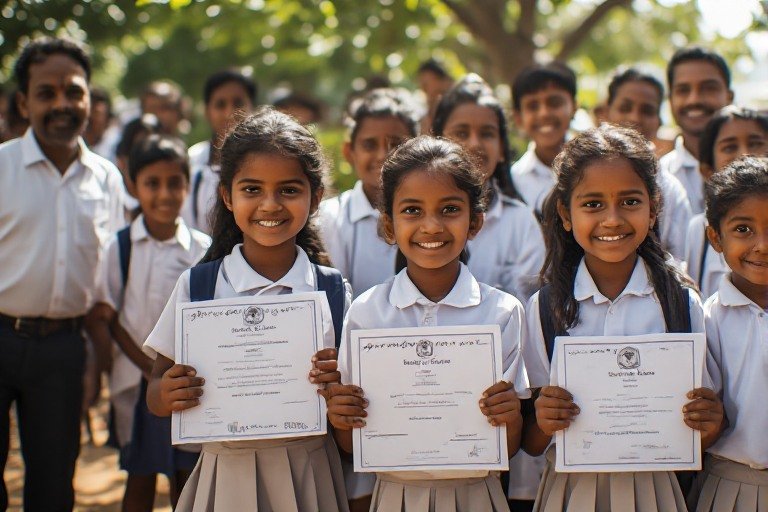
The awards morning runs on a strict formula. Names called, certificates handed over, applause exactly as loud for the last name as the first, and not a single child photographed looking lonely. Sixty scholarships this year, sixty families breathing a little easier, and then, in the weeks after, the letters from last year’s students started arriving. Those letters are the real ceremony.
What a scholarship covers
Our scholarships are deliberately unglamorous. No laptops, no ceremonies abroad, no branding. Each award covers the costs that actually push poor families to pull children from school. Exam fees. Bus fare. Extra class fees for O and A Level subjects. A pair of shoes that fits. Stationery for the year. For Advanced Level science students, the often crippling cost of practical manuals and past paper books.
Amounts range from eighteen thousand rupees for junior grades to sixty five thousand for A Level science, paid directly to schools and suppliers wherever possible rather than as cash, because money earmarked for bus fare has a way of becoming money for emergencies, and emergencies in poor houses never end. Parents understand this system and support it. It protects the child’s share from the family’s very real pressures.
Selection runs through principals and our own home visits. Grades matter, but need matters more, and attitude matters most. We have funded average students with fire in them over brilliant students coasting, and the fire has won every time. Teachers nominate, our team verifies, and a small panel including a retired principal makes the final list. Appeals are allowed and occasionally succeed, because panels can be wrong and humility is a policy.
The letters
Every scholar is asked, not required, to write twice a year. Most do, and the letters accumulate into the most-read file in our office. This year’s arrivals included a grade nine boy reporting, with evident pride, that he came third in class and first in behaviour, whatever ranking that is. A grade eleven girl wrote that her new shoes squeaked for a week and she loved them anyway.
The A Level letters hit hardest. A science student described studying by lamp during power cuts and scoring three Bs, followed by the sentence the whole office now knows by heart. Tell the people who paid my bus fare that their money learned physics. A commerce student reported her first bank account, opened with her first part time wages, containing eleven thousand rupees she refuses to spend because it proves she can earn.
One letter came with a gift, a handkerchief embroidered with our foundation’s initials, slightly crooked, utterly priceless. It hangs framed in the office now, above the filing cabinet, where every difficult budget meeting can see it.
Scholarship fund 2026
| Level | Awards | Typical support |
|---|---|---|
| Grades 6 to 9 | 26 | Fees, transport, stationery |
| O Level years | 16 | Exam fees, extra classes, books |
| Advanced Level | 18 | Practicals, manuals, transport |
Where the money comes from
The fund blends three sources. Named sponsors who support individual students and receive their letters. Our general education budget. And the quiet hero of the programme, a group of past scholars now working who contribute monthly, amounts from five hundred to five thousand rupees, with a shared chat group that celebrates every new award like a family event. The circle, as they say in our office, is completing itself beautifully.
Total scholarship spending this year comes to twenty four lakhs. Our published accounts break it down student by student, anonymised by number, so any donor can trace the shape of the whole fund. Named sponsors get their student’s letters directly, which is a far better return than any interest rate.
The rule about pride
Scholars are never identified publicly as charity cases. Awards are announced as merit support through the schools, photographs require written parental consent, and our staff are trained to discuss the programme in terms of investment, never pity. A child who feels chosen works harder than a child who feels rescued. Language shapes effort, and we choose ours carefully.
The sponsors shelf
Named sponsors occupy a special place in our office, literally. A shelf holds a folder per sponsor, each containing their student’s letters, term results and the occasional photograph, all shared with written consent. Twice a year we post the folder contents with a short cover note, and the replies we receive could fill a second shelf. Sponsors write back to students through us, and those return letters are guarded by the students like treasure, because they are.
One sponsor, a retired teacher in Colombo, has supported the same family line for six years, moving from the elder sister through to the younger brother as each finished. She attends every awards morning, sits with the parents, and remembers every grade. Asked why she never misses it, she says the students’ letters are the best reading of her year, better than the novels her book club assigns. The book club, she reports, has started sponsoring a student collectively, out of pure jealousy.
Tell the people who paid my bus fare that their money learned physics.
A Level science scholar, in a letter to sponsors
Applications for next year’s round open in February through school principals. Past scholars seeking to join the contributors circle, and sponsors seeking a student to support, write to info@cjfsrilanka.org. The letters, we promise, are worth every rupee.