

Blog
When the Rains Would Not Stop and Neighbours Became the First Responders
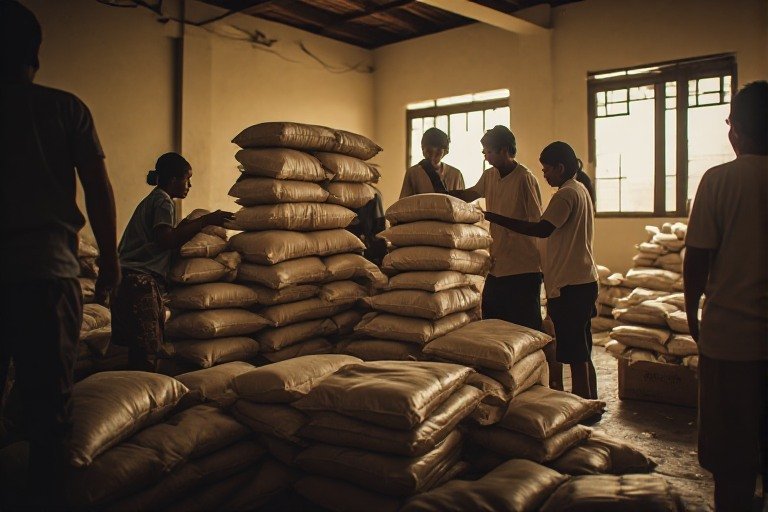
The rain started on a Tuesday night and for three days it barely paused. By Friday morning the lanes behind the main road were under a foot of brown water, and mothers were carrying cooking pots upstairs while grandmothers carried grandchildren. That was the week our volunteers learned what they were really made of.
The call went out on Thursday
Our field coordinator in Colombo keeps a simple rule. When three families from the same street call in one day, we open the store cupboard. On Thursday we had eleven calls before lunch. We posted one message in the volunteer group asking who could come after work, and by six that evening thirty two people were standing in the community hall with their sleeves rolled up.
Nobody waited to be told what to do. The older volunteers set up tables in an assembly line. Rice into bags. Dhal into bags. Dried sprats, a packet of tea, a bar of soap, a bottle of clean water. The younger ones counted and stacked. A retired teacher named Mrs. Fernando took charge of the register, writing every family name in a school exercise book so nobody would be missed and nobody would be served twice while others waited.
By midnight we had packed four hundred dry ration bags. The hall smelled of tea and wet umbrellas, and somebody’s little boy had fallen asleep on a pile of empty rice sacks. His mother kept packing. She said the work kept her from worrying about her own kitchen, which was ankle deep at home.
A kitchen that fed four hundred
Dry rations keep a family going, but cooked food keeps hope going. On Saturday morning two of our volunteer aunties arrived with their biggest pots and set up a community kitchen in the temple hall next door. The temple committee gave the space without a second thought, and a vegetable seller from the market sent two crates ofGotukola and beans free of charge when he heard what they were for.
Over three days that kitchen served more than twelve hundred hot meals. String hoppers and kiri hodi on the first day. Rice and dhal and a seeni sambol on the second. Nobody asked for names or identity cards. If you were hungry and you were there, you ate. Children ate first. That was the only rule, and nobody argued with it.
One week of flood response
| Measure | Count |
|---|---|
| Dry ration bags packed and delivered | 400 |
| Hot meals served from the community kitchen | 1,250 |
| Families reached across six streets | 400 |
| Volunteers who gave at least one shift | 58 |
What the register taught us
Mrs. Fernando’s exercise book turned out to be the most valuable thing we carried out of that week. Going street by street, name by name, it showed us exactly which households had an elderly person living alone, which had a newborn, and which had lost a day wage job because the workshop floor was underwater.
That list became our follow up plan. In the two weeks after the water went down, our team visited every marked household again. We carried cleaning supplies the first time and repair contacts the second time. A mason from our volunteer pool fixed three boundary walls free of charge. A nurse volunteer checked on twelve elderly residents and arranged clinic visits for four of them.
Relief that ends when the water drains is only half the job. The families remembered who came back the week after. That is when trust is built, and trust is the whole foundation of everything else we do in a neighbourhood.
The quiet heroes
Ask anyone who was in that hall and they will tell you about someone else. The three wheeler driver who ferried bags for two days and refused fuel money. The bakery owner who sent a hundred loaves every morning. The teenage boys who waded into the flooded lane with bags on their heads, laughing the whole way because that is what seventeen year olds do even in a flood.
The school that reopened first
Of the six streets we served, one lane deserves special mention. Its little primary school had taken in twenty displaced families, classrooms turned dormitories with mats wall to wall. When the water dropped, the principal faced a choice. Reopen fast and risk a half ready building, or wait and lose a week of term. She chose fast, and asked for help instead of permission.
Thirty volunteers arrived on Sunday with brooms, disinfectant and a borrowed pressure washer. Desks scrubbed. Walls washed to shoulder height. The soggy library corner reborn with books dried page by page in the sun, a sight that drew a small crowd of children supervising loudly. By four in the afternoon the classrooms smelled of soap instead of silt, and Monday morning the bell rang on time. Attendance that day was ninety percent, the missing ten percent being families still drying out homes, all visited by teachers that same week.
The ledger that balanced to the rupee
Flood spending deserves the same transparency as everything else, so here are the figures. Rice, dhal, dried fish, tea and oil for four hundred bags came to just under nine lakhs, bought wholesale from two suppliers who extended credit without being asked. Vegetables and bread for the kitchen were largely donated, with cash purchases of one lakh forty thousand. Van fuel, boat fuel and phone credit added another eighty thousand.
Funding arrived as forty three individual gifts, one temple collection and a single business sponsor who covered the rice bill in full. Every donation is receipted, every expense vouchered, and the full statement was pinned beside the volunteer roster for a month. Emergency money spent in daylight stays clean. That is the rule, floods or no floods.
We did not rescue this street. This street rescued itself, and we just held the bags open.
A field coordinator, Colombo flood response
That sentence stayed with us. Our role is often exactly that. To hold the bags open, to keep the register honest, and to make sure the help reaches the last house in the lane, not just the first.
What comes next
December brings its own work. The same hall where we packed ration bags will host our Christmas parcel packing next week, and many of the same volunteers have already signed up. If you would like to join them, write to volunteer@cjfsrilanka.org and tell us where you are based. There is always a table that needs one more pair of hands.
To every neighbour who cooked, carried, counted and cleaned that week, from all of us at CJF Sri Lanka, thank you. Elevating dreams starts with showing up, and you showed up.