

Blog
Before the Monsoon and the Checklist on the Wall
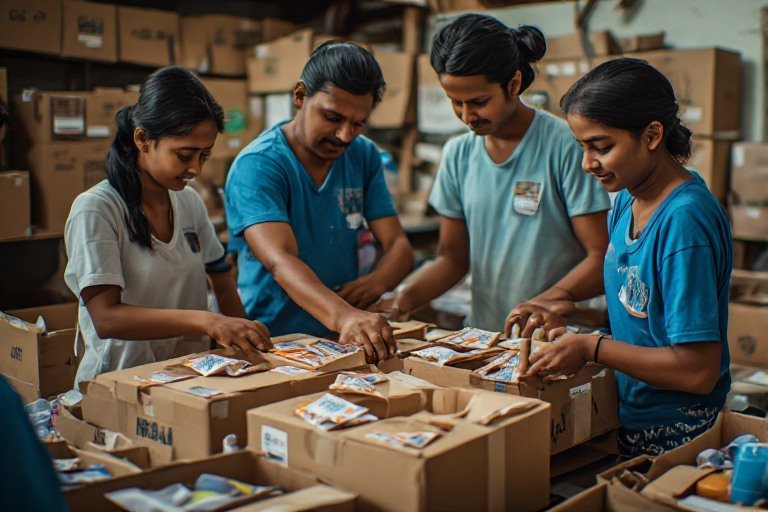
Last November taught us what water can do when nobody is ready. This October, the wall of our Colombo store room carries a checklist in three languages, and every item on it will be ticked before the month ends. Preparedness is unglamorous, inexpensive and, when the river rises, worth more than every speech ever given about resilience.
The checklist
Our preparedness list was written with village committees, the lessons of last November fresh in everyone’s mind. Drains cleared on six streets before the fifteenth. Emergency contact trees updated, with three phone numbers per household and a paper copy at each school, because phones die and paper does not. Two hundred emergency kits packed, each with dry rations for three days, candles, matches, soap, a first aid basics pack and a laminated card with shelter locations.
Shelter points agreed with temples, schools and the community hall, each with a named key holder and a backup key holder, because the key holder will inevitably be visiting relatives when the water comes. The van fuelled and the driver rostered through the high risk weeks. The boat owner’s number saved, a contact we hope to never use and check monthly anyway.
Most importantly, the register system from last year stays live. Vulnerable households, the elderly alone, newborns, the immobile, marked and assigned to named volunteers who check on them at the first warning. Last November’s exercise book has been promoted to a proper file, and Mrs. Fernando guards it like the crown jewels.
What readiness costs
Total preparedness spending across six neighbourhoods comes to just under six lakhs, mostly kits, drain tools and fuel reserves. Against the cost of one chaotic relief week, it is pocket money. Donors sometimes prefer funding visible relief to invisible readiness, which is understandable and wrong, so we frame it plainly. Every rupee of preparation saves ten rupees of emergency response, and saves something no money replaces, which is the panic of the unready.
Village labour covers the drain clearing and shelter setup through community work days, which double as preparedness drills in disguise. Children learn the shelter routes as a game. Elders test the contact tree by calling down the branches. Practice, repeated lightly, becomes instinct exactly when instinct is needed.
Monsoon readiness, October 2026
| Task | Target date | Status |
|---|---|---|
| Drain clearing, six streets | 15 October | In progress |
| Emergency kits, 200 packed | 20 October | Packing Saturdays |
| Contact trees updated | 25 October | Paper copies to schools |
| Shelter points confirmed | 31 October | Key holders named |
The schools drill too
All fourteen of our partner schools run a monsoon drill this month, practising early dismissal procedures, shelter in place routines and the buddy system pairing older pupils with younger ones. Parents receive the drill schedule in advance with pick up points, because a prepared parent is a calm parent and calm parents make everything work.
School kitchens stock a week’s dry store above normal levels, and the parent committees, veterans now of real operations, manage their own readiness lists with minimal input from us. Independence, practised under blue skies, holds under grey ones. That is the theory, tested last November and holding so far.
Your part in the checklist
Readiness needs hands more than money. Drain clearing work days run the next three Saturdays, gloves and tools provided, lunch guaranteed by the community kitchen veterans. Kit packing continues at the hall. Drivers with high clearance vehicles are asked to register for the emergency roster, used rarely and gratefully.
The boat owner and the drill that worked
Every plan needs a boat owner, literally in our case. Mr. Jayantha keeps a fibreglass boat for lagoon fishing and lends it to the emergency roster each monsoon, on two conditions. It returns washed, and his name stays out of all speeches. Last November his boat ferried medicine, a midwife and seventeen stranded residents across two days, and he refused even fuel money, accepting only tea and the silent respect of everyone who knows.
This October the roster ran a full drill. Contact tree activated at dawn on a Saturday. Shelter points opened. The boat launched and toured the flood lanes with the field team timing every leg. Total drill time, just under three hours from call to stand down, with notes on two slow junctions and one confused key handover, both fixed the same week. Practice does not make perfect. Practice makes adequate, and adequate saves lives.
What last November cost, in full
Full accounting of the 2025 flood response closed this month. Nine lakhs in dry rations. One lakh forty thousand in kitchen cash purchases. Eighty thousand in fuel and communications. Twelve hundred and fifty meals served. Four hundred families reached. Zero rupees unaccounted for, with every voucher filed and the statement pinned beside the roster for a month. Emergencies deserve the same daylight as everything else, and this file stays open to any volunteer who asks.
Last year the water surprised us. This year it will find Mrs. Fernando’s file, two hundred kits and six clear drains. Let it come.
Field coordinator, preparedness briefing
Join a work day or packing Saturday through volunteer@cjfsrilanka.org. And to every household in a low lying lane, check your street’s contact tree this week. The rains deserve respect, not fear, and respect looks like a checklist fully ticked.