
Blog
First Market Day for the Maker Group
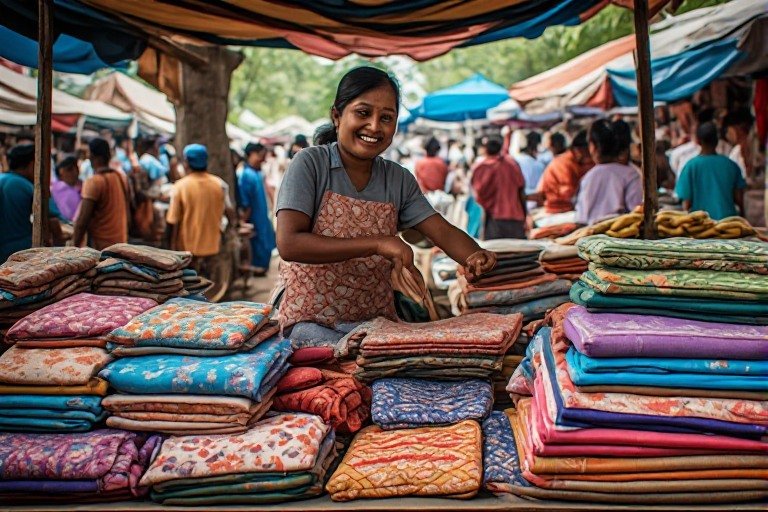
The treasurer arrived at six in the morning with the cash box, the price list and a face arranged for battle. By eight the stall was dressed. By nine the first customer had bought a tablecloth without haggling, which the group took as an excellent omen. By two in the afternoon everything was gone, the tablecloths, the cushion covers, two hundred pad packs, and the group stood behind an empty table grinning like lottery winners.
Preparing for the market
A market day is an examination, and the group revised accordingly. Stock planning started a month ahead, with production targets per member per week and quality inspection twice weekly instead of once. Pricing was set with our enterprise team’s help, covering fabric, labour at fair rates, transport, the stall fee and a margin for the group fund, then checked against comparable goods to stay competitive without racing to the bottom.
Display matters as much as product. The youngest member, she of the terrifying efficiency, designed the stall layout on paper first. Tablecloths hung where the breeze could lift them. Pad packs stacked in neat pyramids with the instruction cards visible. A simple sign, group name and one line about makers earning with dignity. Business cards, four hundred of them, gone by noon to people who will order later, which is the real harvest of any fair.
Roles were assigned the night before. Two sellers, one cashier, one restocker, one wanderer handing out cards to other stalls. The chair held overall command with a whistle she never needed to use. Practice pitches were rehearsed, including answers for the two hardest questions. Why do your pads cost more than disposables, and how do I wash them. Both answered honestly, with maths and without embarrassment.
The day itself
Morning belonged to browsers. Midday belonged to buyers. The lunch hour brought office workers with thirty minutes and full wallets, and the tablecloth stock melted visibly. A gift shop owner bought twelve cushion covers and left a standing order for monthly supply. A school principal ordered eighty pad packs for her welfare programme on the spot, paying a deposit from her handbag.
Total takings came to three hundred and forty thousand rupees for one day, against costs of roughly one hundred and ninety thousand including the stall fee. Net profit of about one hundred and fifty thousand, a record for the group, banked on Monday with the treasurer’s signature and the chair’s countersignature. The ledger entry for the day carries a small star drawn beside it, the first star in the book’s history.
First market day results
| Line | Sold | Note |
|---|---|---|
| Tablecloths | 40 | Sold out by noon |
| Cushion covers | 60 | Gift shop standing order gained |
| Reusable pad packs | 200 | School order of 80 placed |
What sold, and why it matters
Every product that sold carries the same story. A maker earned, a buyer chose quality, and the money stays in the community instead of flowing to a distant factory. Multiply one market day by the group’s growing calendar, monthly fairs, festival seasons, school orders, pharmacy consignments, and the loan repayment schedule starts looking conservative. The group now projects full repayment a year early, and our finance officer has stopped worrying and started planning the celebration.
The school order deserves special attention. Eighty pad packs for a welfare programme means eighty girls with reliable protection for years, supplied by women earning a living making them. Need met by enterprise, dignity at both ends. This is Resources For All working exactly as designed, and it is why November’s big story about this group will feel like a homecoming to readers who have followed along.
Next markets and how to order
The group now holds a monthly fair slot plus festival bookings through December. The order book for custom table linen opens two months ahead, and the phone order list for pads delivers across Kandy weekly. Quality inspections continue, the whistle remains unused, and the treasurer has ordered a second cash box.
The card harvest
Four hundred business cards went out, and the group treats them as seeds, not souvenirs. Every card recipient was logged with a note about their interest, and follow up calls began the following week. The gift shop owner confirmed the monthly standing order. Three hotel purchasing managers requested samples of table linen. Two schools asked for pad programme presentations. A bride to be ordered two hundred favours for her wedding, the group’s first celebration order, packed with particular joy.
Conversion tracking hangs beside the order board. Cards to calls, calls to visits, visits to orders, each ratio reviewed monthly. Current card to order conversion runs near one in fifteen, which the enterprise team calls excellent for a first fair. The youngest member manages the follow up list with her usual terrifying efficiency, and the second cash box, newly arrived, already needs a label.
At nine we were nervous sellers. At two we were standing behind an empty table. I have never been so happy to have nothing to sell.
Group chair, Kandy maker group
To stock pads in your pharmacy, order linen for your hotel or guesthouse, or book the group for your fair, write to info@cjfsrilanka.org with the subject Makers. Buy the tablecloth. Meet the maker. Take a business card. They have four hundred more where those came from.