

Insights & Reflections
Training the Teachers Who Notice Everything
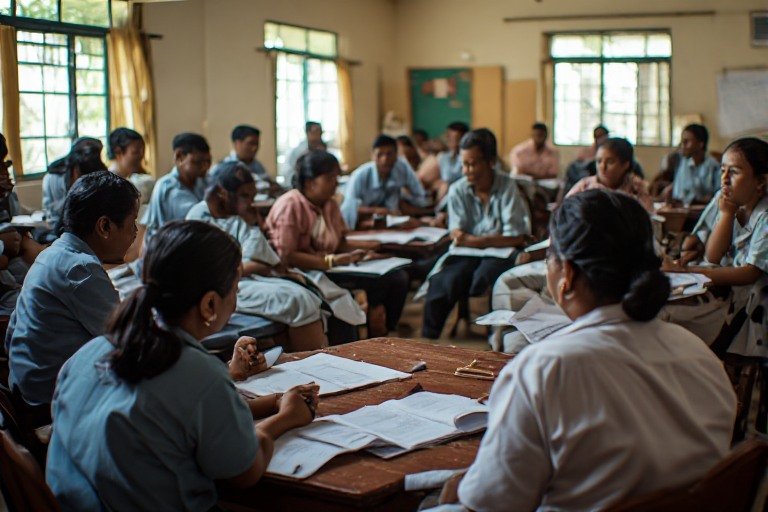
The most important skill in a classroom cannot be examined, inspected or laminated. It is noticing. Noticing the bright child gone silent. The joke that covers hunger. The perfect attendance that suddenly breaks. Forty teachers spent this weekend learning to notice better, and to act gently on what they see.
Why training starts with the teachers inner life
Here is an unfashionable truth about teacher training. You cannot teach calm to children from a frazzled adult. So our workshops start not with the pupils but with the teachers themselves. Breathing exercises that survive a staffroom. Realistic talks about burnout, transfer worries and the particular exhaustion of caring deeply in under resourced schools. Permission, stated plainly, to have hard days.
Only then do we move to practice. Greeting routines rehearsed in pairs until they feel natural. Transition warnings timed and tried. The calm corner set up, sat in and evaluated by grown adults who discover, usually with surprise, how much a cushion and a book help a rattled nervous system at any age. Teachers who have felt the practices work on themselves carry them into classrooms with conviction no manual can give.
Role play does the heavy lifting. A volunteer plays a withdrawn child while the group practises three different responses, then discusses which felt safest. A principal plays an angry parent while a young teacher practises the de escalation script. Laughter is frequent and deliberate. People learn fastest when their guard is down, and nothing lowers it like watching your zone director fail gloriously at playing a seven year old.
The noticing curriculum
The core of the training is a simple framework our coaches call the three shifts. Appetite shifts, a child suddenly refusing the snack they loved. Energy shifts, the lively one gone flat or the quiet one gone wild. Attendance shifts, patterns in absence that map to paydays, harvests or trouble at home. None of these prove anything alone. Together, tracked gently over weeks, they tell teachers exactly which child needs a conversation.
And conversation, not interrogation, is the trained response. Sit beside, not opposite. Ask about the easy things first. Offer the calm corner before advice. Record privately, follow up reliably, refer early to the counsellor or the midwife rather than late. Teachers practise these conversations until the words feel like their own, because scripts recited sound like scripts, while scripts absorbed sound like care.
Training weekend at a glance
- Morning oneTeacher wellbeing and calm practices
- Afternoon oneGreeting routines and transitions
- Morning twoThe three shifts and gentle conversations
- Afternoon twoRole play, coaching pairs, action plans
| Measure | Count |
|---|---|
| Teachers completing the weekend | 40 |
| Schools represented | 18 |
| Peer coaches supporting | 12 |
| Follow up coaching visits booked | 72 |
What changes after the weekend
Training without follow up is tourism, so every teacher leaves paired with a peer coach and a calendar of three classroom visits across the term. Coaches observe, note strengths first, suggest one change at a time, and leave a written card the teacher keeps. No reports go to any authority. Coaching is confidential by design, because teachers improving need safety exactly like children do.
Schools also leave with a starter kit. Calm corner cushions and books. Greeting routine posters. The conversation prompt cards, discreetly designed to look like ordinary desk stationery. And the Midwife link form, connecting each school to its area health worker for the cases teachers should not carry alone. Small things, each one load bearing.
A reflection on who teaches the teachers
Our twelve peer coaches deserve the last word, because they do the unglamorous weekly work while workshops get the photographs. They travel by bus to distant schools, sit on small chairs, praise sincerely, correct kindly, and return month after month. Most were once sceptics themselves, converted by their own classroom results, which makes them living proof that change is possible rather than merely instructed.
The principals circle
Head teachers meet monthly as a principals circle, and these sessions may matter more than the workshops. No agendas from Colombo, just shared problems and borrowed solutions. How to protect the calm corner during exam term. What to do when a transferred teacher resists the new routines. How one school funded cushions from its own development budget, a story retold with admiration and promptly copied by three others.
The circle runs on a strict rule imported from the mothers groups. What is shared stays shared, and struggling schools get help, never judgment. Two principals on the verge of abandoning the model were talked back by peers, not by us, which is exactly how sustainability sounds. When heads own the change, the change survives every transfer season.
I used to ask what is wrong with this child. Training taught me to ask what happened to this child. One word changed, everything changed.
A participating teacher, weekend reflection
Schools wishing to join the model can express interest through their zonal office or directly to us. The waiting list currently holds forty schools and moves in order, with need and principal commitment deciding sequence. Write to info@cjfsrilanka.org and tell us about your classrooms. We will bring the cushions.