

Insights & Reflections
Handing the Lunch Programme to the Parents Who Run It Now
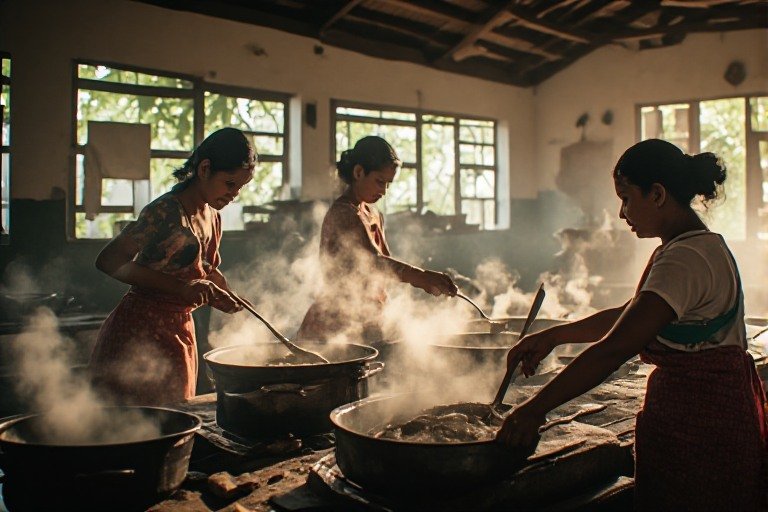
There is a moment in every good programme when the outsiders become unnecessary, and the wise ones celebrate it instead of fearing it. Last Monday that moment arrived in three school kitchens simultaneously. Our field officers handed the account books to the parent treasurers, kept their hands in their pockets, and watched the lunch get cooked without them. It was perfect.
Why handovers usually fail
Let us be blunt about the sector’s open secret. Most charity handovers fail, and they fail for familiar reasons. The exit is announced, not prepared. The community committee exists on paper but never practised real decisions. The money stops overnight instead of tapering. The outsiders keep visiting to check up, which teaches everyone that responsibility was never truly transferred. Then the activity withers, the report claims sustainability, and the village learns to smile politely at the next project.
We have watched this film and refused to star in it. So the handover of the school snack programme was designed backwards from the failure modes. Preparation started in week one of the ninety days, not week twelve. Committees practised with real money and real consequences for two months before independence. Support tapers over eight weeks instead of vanishing. And our visits switch from supervision to invitation, we come when asked, bringing encouragement and occasionally cake, never clipboards.
What the parents actually run now
The numbers first, because romantics should also be accountants. Each school kitchen serves between one hundred and eighty and two hundred and forty children daily. Weekly ingredient cost runs twelve to fifteen thousand rupees per school. Parent contributions, set by each committee after open discussion, average thirty rupees per child per week, with full exemption for families who cannot pay, no questions, no lists, no stigma. Our tapering grant covers the gap, shrinking monthly as collections grow.
Procurement is local by rule. Vegetables from the village sellers, eggs from the poultry keeper down the road, coconut from whoever has surplus this week. The treasurer keeps a simple cashbook, photographed weekly to our programme officer, and the books are read aloud at the monthly parent meeting. Forty two roster mothers cook in rotation, trained in hygiene and portioning, with makeup days for anyone who misses. Quality is enforced by the toughest inspectors in the world, the children, whose verdicts are instant and unappealable.
Handover health check
- Weeks 1 to 8Committees observe and assist
- Weeks 9 to 13Committees decide, staff advise
- June to JulyTapering grant, full committee control
- August onwardIndependent running, visits by invitation
| Item | Figure |
|---|---|
| Children served daily | 180 to 240 |
| Weekly ingredient cost | Rs 12,000 to 15,000 |
| Parent contribution | About Rs 30 per child weekly |
| Exemptions for hardship | Full, no questions asked |
| Roster cooks | 42 mothers across 3 schools |
The psychology of stepping back
Handing over is emotionally harder than starting up, and honest organisations admit it. Staff worry the standards will slip. Donors worry the photos will stop. Founders worry their legacy will fade. All valid feelings, all subordinate to the point. If a kitchen needs us forever, we built dependence, not development, and dependence is the opposite of the mission.
So we trained our own team to celebrate redundancy. The field officer who managed the central kitchen wept a little at the handover ceremony and then admitted she was crying because she was proud, which the mothers found far more moving than any speech. Our job descriptions for the next phase say advisor, not manager. Words shape behaviour, including ours.
What could still go wrong
Clear eyed as ever, here are the risks we monitor. Contribution fatigue if harvests fail. A treasurer falling ill with no trained deputy, now fixed by requiring two trained signatories per school. Ingredient price spikes, cushioned by a small reserve fund we left with each committee. And the ever present risk of a well meaning outsider offering to take over, which the committees have been coached to decline politely but firmly. This kitchen is theirs.
The reserve fund that lets everyone sleep
Every kitchen holds a reserve fund, and understanding it explains why the handover works. Each committee banks a cushion equal to one month of ingredient costs, built from our tapering grant and early collections, held in the school welfare account with two signatories. It covers exactly three emergencies. A price spike in coconut or eggs. A delayed parent collection month. A stove repair that cannot wait for the meeting cycle.
Rules govern its use strictly. Any withdrawal needs both signatories and a note in the cashbook, read aloud at the next meeting. The fund is replenished before any other spending resumes. In six months of operation one kitchen has dipped into its reserve once, for a gas cylinder replacement, and restored it within three weeks. A safety net with rules gets used wisely. A safety net without rules gets used up. We chose rules.
You taught us to cook for two hundred. Then you taught us to count for two hundred. Now please come for lunch as guests, and bring nothing but appetite.
Parent treasurer, handover ceremony
We will keep visiting, invited and cake bearing, and the quarterly nutrition checks continue with the midwives regardless. Independence with a safety net is not dependence. It is wisdom. To other organisations attempting the same, our handover manual, all eleven pages of plain language, is yours for the asking at info@cjfsrilanka.org. Good goodbyes should be copied freely.