

Blog
Ninety Days Done and What One Thousand Families Taught Us
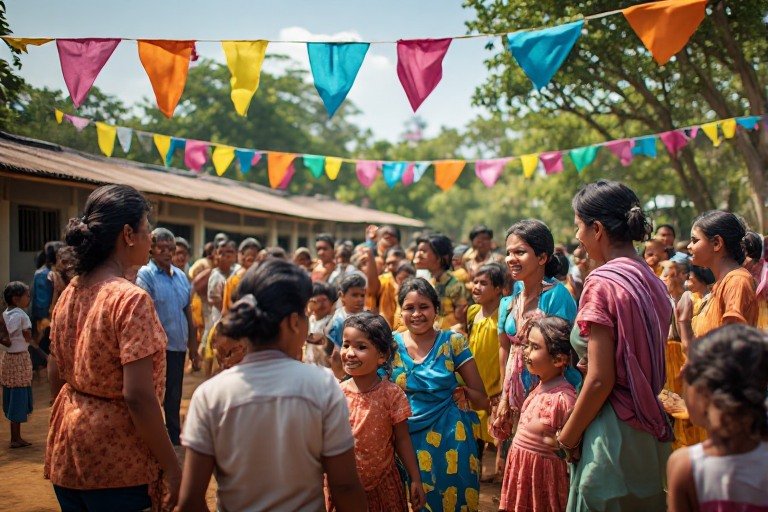
Thirteen weeks. Thirty nine distribution days. Three thousand food boxes. Tens of thousands of school snacks. And on Saturday, in three school grounds simultaneously, the closing ceremonies. No speeches from Colombo, by design. The parent committees ran the day, and our staff sat in the audience where they belonged, clapping the loudest.
The final numbers
Final screenings covered five hundred and seventy two of the six hundred enrolled children, with the absent twenty eight followed up at home. Among children who began in the yellow zone, seven in ten now measure in the green. All twelve red zone children improved, with eight reaching yellow and four reaching green, results our nutritionist calls genuinely good for a ninety day window and the midwives call the best news of their year.
School attendance among enrolled children finished seventeen percent above the same term last year. Parent roster teams served every single school day without a gap, a perfect attendance record by forty two volunteer mothers that deserves its own trophy. Household survey resits show meal skipping down sharply, with nine in ten families reporting three meals daily against barely six in ten at baseline.
The complaints boxes closed with a lifetime total of nineteen slips, every one answered within seven days and the log published on the notice boards. Final expense accounting shows the programme spent within two percent of budget, with the variance being extra transport during the April rains. Donors receive the full line by line account this month, as promised on day one.
What worked best
Ask the team and the same answers come back. The parent roster system, which turned feeding from a handout into a neighbourhood institution. The complaints boxes, which caught small problems while small. The midwives, without whom none of the targeting or trust would have existed. And the van route rotation the mothers demanded, which sounds trivial and prevented a hundred resentments.
Ask the mothers and the answers are simpler. The food came on time. The children ate. Nobody was shamed. One mother told the closing ceremony that for the first time in years she packs her children’s school bag without calculating whether there will be food to put beside the books. Think about that sentence for a moment. Then think about what it must have felt like to live the opposite.
Dignity First final results
| Measure | Baseline | Week 13 |
|---|---|---|
| Children measured in green zone | About 4 in 10 | About 8 in 10 |
| Red zone children | 12 | 0, all improved |
| Families eating three meals daily | About 6 in 10 | About 9 in 10 |
| School attendance vs last year | Baseline | Up 17 percent |
What we would do differently
Honesty requires the other list too. We underestimated transport needs in the rains and paid for it in overtime. The fathers evening happened once when it should have been monthly from the start. Snack variety ran out of ideas by week ten, and the children noticed before we did. And our data entry lagged two weeks behind reality in March, meaning decisions that should have taken days took a fortnight.
Each lesson is now written into the expansion plan. Bigger transport buffer. Fathers sessions monthly from week two. A six week rotating menu designed with the mothers, not for them. And a data volunteer assigned per catchment instead of one poor soul covering all three. Programmes that cannot list their mistakes have not looked hard enough.
The handover begins
Intensive support ends, but feeding does not. The parent committees take over the school snack programme from this week with our backing tapering over two months, flour and funds guaranteed while their own contribution collections build up. The full handover story deserves its own post, and it gets one next week.
The audit week
After the celebrations came the quiet week nobody photographs and everybody should. An independent volunteer accountant, a retired auditor with no ties to any supplier, spent five days checking every voucher, van log and stock sheet from the ninety days. Her report ran eleven pages and found the books clean, with three recommendations we have adopted wholesale. Separate fuel logs per route. Photograph stock arrivals at the store. Number the complaint slips for easier tracking.
Donors received the full account within the month, line by line, with the auditor’s letter attached and the variance on transport explained to the rupee. Two donors increased their next commitments on reading it, and one wrote that the audit letter mattered more than the results tables. Trust is built in audit weeks, not closing ceremonies, and we schedule accordingly for every major programme.
Ninety days of boxes fed our children. Ninety days of being trusted changed their mothers. Guess which lasts longer.
Parent committee chair, closing ceremony
To the one thousand and twelve families, the forty two roster mothers, the midwives, the drivers, the packers and the donors, thank you. Read the handover story next, and if your village hopes to join a future round, the criteria sheet and waiting list are open at info@cjfsrilanka.org.