

Blog
The Groundwork for Clean Water Starts With a Survey and a Shovel
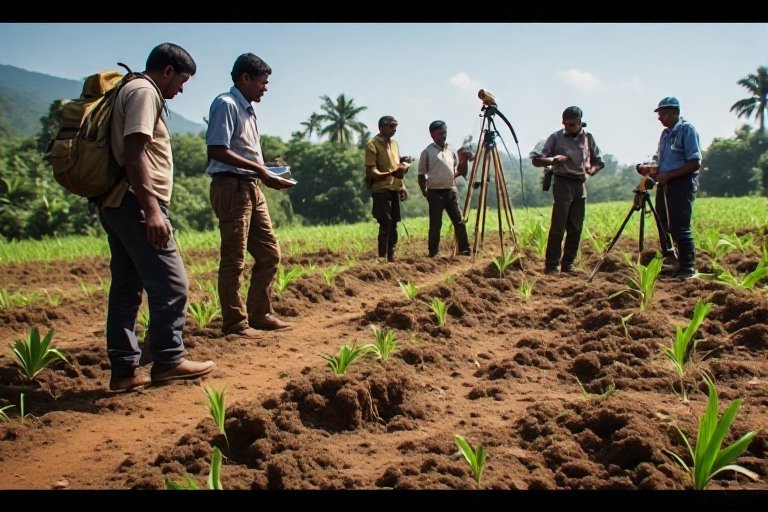
Nobody photographs a survey. There is no ribbon to cut around a test pit, no cheering crowd for a water diviner’s reading. But every working well we have ever handed over began exactly here, with patient people walking a dry field, asking where the old well failed and why, and writing the answers down.
Why wells fail, and how we avoid it
The dry zone is scattered with failed wells, and each one teaches the same lessons. Dug in the wrong place on a guess. Dug deep enough for a wet year but not a dry one. Dug without lining, so the walls collapse by the second season. Dug for one family on land another family disputes. A well is a twenty year promise, and promises need foundations.
Our process starts with the village water committee, elected at an open meeting, with women holding at least half the seats because women carry the water and know its story best. The committee walks us through the history. Which months the old sources dry up. How far women walk in April. What the water tastes like in September, when minerals concentrate and children get stomach trouble.
Then comes the hydrogeologist, a quiet professional who has sited over two hundred wells and treats dowsing rods as entertainment for the children while his resistivity meter does the real work. Readings are taken at multiple points, test pits confirm soil and rock, and only then is a drilling point marked with paint and a prayer. Two sites earned their paint marks this month. Two others were rejected, one for brackish readings and one for a land dispute we will not touch until the families settle it themselves.
What a proper well costs
Sponsors sometimes imagine a well costs a few bags of cement. A proper community well, drilled to reliable depth, lined, capped, fitted with a hand pump or electric pump with a storage tank, fenced, and handed over with a maintenance fund and a trained caretaker, costs between eleven and fourteen lakhs depending on depth and rock. Anything cheaper is either a miracle or a future ruin.
The village contributes labour for the compound, the fence and the surroundings, plus a monthly maintenance collection agreed in advance, usually fifty rupees per family. This is not about the money, which barely covers oil and washers. It is about the principle. A well nobody pays towards belongs to nobody, and a well that belongs to nobody breaks in year three. Our oldest community well is eleven years old and pumps sweet water every morning, because its committee never missed a collection or a cleaning day.
Well programme status, March 2026
- Surveyed4 sites assessed, 2 approved for drilling
- Drilling rig booked for the dry window in May
- Lining and cappingConcrete work by village labour teams
- HandoverCommittee trained, fund opened, caretaker named
| Site | Status | Expected depth |
|---|---|---|
| Site A, north division | Approved, drilling in May | About 45 metres |
| Site B, east division | Approved, drilling in May | About 38 metres |
| Site C | Rejected, brackish readings | Not pursued |
| Site D | On hold, land matter pending | Not pursued |
The caretaker system
Every well gets a named caretaker, trained in pump maintenance, basic repair and water hygiene, equipped with a toolkit and a phone number for our technician. Caretakers are paid a small monthly honorarium from the maintenance collection, because responsibility without recognition rots. Our longest serving caretaker, a grandfather of nine, keeps a logbook of every repair in fifteen years, written in pencil, which our engineer calls the finest maintenance record in the Northern Province.
Water quality is tested at handover and yearly after, with results shared openly at the village meeting. When one older well showed rising mineral levels last year, we said so plainly, restricted it to washing use, and fast tracked the replacement site. Bad news delivered early is a problem shared. Bad news hidden is a betrayal discovered.
Why two sites were rejected
Rejecting a site is harder than approving one, and both rejections this round deserve telling. Site C failed on science. The test pit water tasted faintly of salt, the resistivity readings confirmed brackish intrusion, and our hydrogeologist delivered the verdict kindly but finally. A well there would have served two good years and twenty bad ones. The village committee accepted the finding after tasting the test water themselves, and asked us to keep their site on the watch list in case future rains shift the picture.
Site D failed on people, which is sadder. Two families dispute the boundary where the well would stand, a disagreement older than the youngest volunteer. Our policy is absolute. We never build on contested land, because a well that becomes a weapon helps nobody. We offered to return the moment both families sign a shared access agreement, and left the survey map with the village head as a standing invitation. Peace first, then water. The order matters.
Drill where the science says, build what the village agrees, and maintain what the caretaker logs. Wells are simple. People make them complicated, so start with the people.
Project engineer, water programme
Visiting the sites
Drilling happens in the May dry window and visitors are welcome at a safe distance, preferably bringing cold drinks for the crew, a tradition our engineer insists is structural rather than social. School groups studying water and environment can arrange guided site visits through our office.
To sponsor a well component, from a pump to a full site, or to volunteer with the labour teams on lining days, write to info@cjfsrilanka.org. And to the two villages whose sites were approved this month, congratulations. The paint mark is down. The water is coming.